When Did Jesus Christ Die? Part 3: Pentecost, the calendar, and June 9, 2030

On one dark and dismal day, man nailed his Maker to a cross of wood. On that day of redemption, that day of prophetic promise, one would expect divine intervention to intervene — and it did. On the day our Lord and Savior hung suspended between earth and eternity, five matchless miracles took place from the cross, all within the span of a single Gospel account (Matthew 27:45–54).
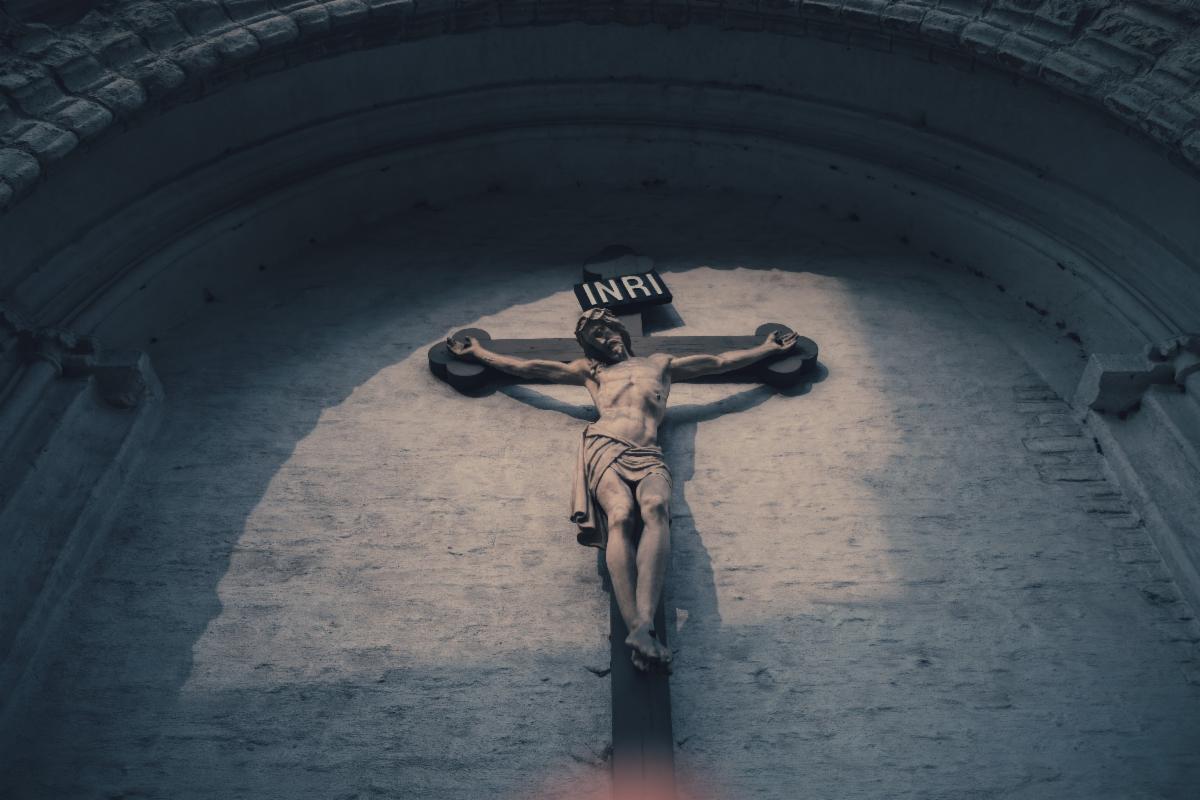 Jesus reached up and touched the sun, and the sun refused to shine. For three hours, from the sixth hour to the ninth, darkness fell over the whole land (Matthew 27:45; Mark 15:33; Luke 23:44). One can imagine Jerusalem’s streets that day, candles lit, men and women walking carefully through a darkness no one could explain. Jesus was saying: take Me out of your life, and your life is filled with darkness.
Jesus reached out His hand and tore the veil in two (Matthew 27:51). That veil represented a separation between God and man that had stood for fifteen hundred years; across that span, the first-century historian Josephus counts eighty-three high priests who ever held the office1 — and only the high priest, once a year, ever stood inside the Holy of Holies. Jesus was saying: in Me, there is no more division. You will not need a priest to carry you to the throne — you will be able to come to the throne yourself.
Jesus reached down and touched the earth, and the earth began to shake (Matthew 27:51). He was saying: without Me in your world, your world is filled with devastation — unbalanced, chaotic on every side. But I am the One who puts the pieces of your life back together.
Jesus reached out and touched a cemetery nearby. While He hung on that cross, crying out Tetelestai — “It is finished”2 — men and women were walking out of their tombs and back into Jerusalem3, one of the greatest miracles of all time. Jesus was saying: while I hang and die on this cross for you, you will have victory over death. You will live forever.
And last, a centurion stood in front of Him — a man who oversaw the crucifixion, Scripture does not say how many times before. Yet this man declared, “Truly this was the Son of God.”4 And the greatest miracle of all took place: not just victory over darkness, division, devastation, and death — but victory in deliverance. His sins were forgiven. The greatest miracle of all is still the moment a man or woman decides to follow Jesus Christ.
These are the miracles of Calvary. This is the moment we define. This is our time to celebrate the two-thousand-year birthday of the Church — our moment to bring every fact, every figure, every date and every destiny together into one moment: to celebrate two thousand years of salvation, two thousand years of victory, two thousand years of the Gospel advancing toward the fulfillment of the Great Commission.
We have already studied — carefully, alongside the great scholars of the past and present — and concluded Friday, April 7, AD 30 is the day Jesus Christ died for the sins of the world. What follows from Calvary is not an epilogue. It is not an eclipse. It is a crescendo. Resurrection will be a righteous reality. Ascension will be an almighty action. Pentecost will be a promise possessed — each landing exactly where the calendar says it must, leading to a date on today’s calendar, and an invitation two thousand years in the making.
RESURRECTION, ASCENSION, PENTECOST
 These three dates follow directly from the crucifixion once one counting convention is understood: the Church has always reckoned these spans inclusively, with the Resurrection itself counted as day one. Christ rose on the third day (Friday counted as day one, Saturday as day two, Sunday as day three) — the same reckoning Scripture itself uses (1 Corinthians 15:4). Counting forward from Easter Sunday as day one, the fortieth day lands on Thursday, May 18, matching Luke’s own note that the risen Christ appeared to His disciples “over a period of forty days” before His ascension (Acts 1:3). The fiftieth day, by the same reckoning, lands on Sunday, May 28 — Pentecost, meaning simply “the fiftieth,”5 the name Greek-speaking Jews already used for the Feast of Weeks (Shavuot) that fell on that day.
On that Pentecost morning, the Holy Spirit descended on a company of roughly one hundred twenty believers gathered in an upper room, and three thousand souls were added to their number before the sun set. By the plain reading of Scripture and the near-universal judgment of the Church across every tradition, this is the day the Church of Jesus Christ was born.
Not every voice in Christian history has placed the Church’s birth on the day of Pentecost. Some, such as New Testament scholar Gary Burge, point to the evening of the resurrection itself, when Jesus breathed on His disciples and said, “Receive the Holy Spirit” (John 20:22), treating that moment as a genuine and full impartation of the Spirit.6 Others read that same moment as purely symbolic, anticipating Pentecost rather than completing it. Still others, following theologian E. W. Bullinger, locate the Church’s fullest theological beginning later still, with the Apostle Paul’s own revelation of the Church as the Body of Christ.7 These are not careless readings; they reflect a genuine and long-running theological conversation. But across nearly every Christian tradition — East and West, Catholic, Protestant, and Orthodox alike — the common and prevailing testimony of the Church throughout history has been to mark her birthday as Pentecost. It is this common witness, carried across two thousand years of Christian memory and liturgical practice, that this series follows in counting forward to June 9, 2030.
WHY JUNE 9, 2030
 Pentecost is a moveable feast — its calendar date shifts every year, because it is fixed to Easter, and Easter itself is fixed to the first Sunday after the paschal full moon. Arriving at June 9, 2030 is a matter of two separate, verifiable steps, not a single leap.
First, the anniversary itself. If the Church’s first Pentecost fell in AD 30, then its two-thousandth anniversary falls, by simple arithmetic, in the year 2030. This is not a count of every Pentecost that has occurred in between — it does not require tallying two thousand individual liturgical observances — it is the plain arithmetic of AD 30 plus 2,000 years.
Second, where Pentecost falls within that year. This is where the Gregorian computus — the calculation both the Catholic Church and the Protestant world have used without dispute since the calendar reform of 15828 — does its work. Applying that standard computus to the year 2030 places Easter on Sunday, April 21, 2030, and Pentecost, forty-nine days later, on Sunday, June 9, 2030.9 These are not this series’ own calculations; they are the same dates already fixed on the Western liturgical calendar for that year, verifiable against any standard ecclesiastical calendar.
Two independent steps, each simple and each checkable, converge on the same date: the two-thousandth anniversary of the Church’s birth, and the ordinary working of the calendar the Church already uses every year, land together on June 9, 2030. It is a date arrived at through historical, archaeological, and biblical understanding — approached in a spirit of humility, so as to serve the whole body of Christ.
AN INVITATION: JERUSALEM 2030
 Two thousand years ago, the Church was born in fire and wind on a hillside outside Jerusalem. She has carried the Gospel across every continent, through every century, past every empire that has risen and fallen around her — and she is not finished yet.
On June 9–11, 2030, the Global Church Network (gcnw.tv) will gather leaders from across the global Church at the International Convention Center of Jerusalem to mark the Church’s two-thousandth birthday — not as spectators of history, but as participants in what comes next. One hundred twenty ambassadors, echoing the roughly one hundred twenty believers in the upper room at the first Pentecost (Acts 1:15), each inviting twenty-five distinguished leaders, for three thousand gathered — echoing the three thousand souls added on that first Pentecost (Acts 2:41).
That first invitation was not wordless, and it was not vague. Peter’s appeal moved with purpose, in three deliberate stages. He explained the Spirit, grounding the moment in the words of the prophet Joel — “I will pour out my Spirit on all people… and it shall come to pass that whoever calls on the name of the Lord shall be saved” (Acts 2:17, 21) — naming it the very “day of the Lord” Joel had foretold. He exalted the Savior, proclaiming the death, resurrection, and deity of Christ to a crowd that had watched Him die weeks before (Acts 2:22–28). And he evangelized the sinner, calling every listener who had heard him to repent and receive what had been promised (Acts 2:37–41).
Three thousand responded that day. This invitation echoes that same pattern: grounded not in salvation’s call, but in what God has already done across two thousand years, and in what remains for His Church to finish. Jerusalem 2030 asks the same question Peter’s hearers once answered — not “what shall we do,” but “will we finish what has been started” — and invites three thousand more to respond, on the very anniversary of the day Peter first gave that invitation.10
In addition to celebrating the Church’s two-thousand-year birthday, we will be commencing the first day of the Third Millennium Church, and commissioning the Church to, once and for all, finish the Great Commission. Our final session together will take place in Herod the Great’s amphitheater, overlooking the Mediterranean Sea. This series began by asking who Herod the Great was and when he died; Jerusalem 2030 will close in the very amphitheater he built. It is there that we will commission everyone gathered to complete the Great Commission within the next ten years.
Wherever you serve, whatever your title, whatever your tradition — you are invited to be part of this convergence.

FOOTNOTES — PART 3
- Flavius Josephus, Antiquities of the Jews 20.10.1 (§227): “the number of all the high priests from Aaron… until Phanas… was eighty-three,” counting from Aaron through the destruction of the Second Temple.
- John 19:30.
- Matthew 27:52–53.
- Matthew 27:54.
- Cf. Gerhard Kittel and Gerhard Friedrich, eds., Theological Dictionary of the New Testament, trans. Geoffrey W. Bromiley, vol. 6 (Grand Rapids: Eerdmans, 1968), s.v. πεντηκοστή.
- Gary M. Burge, John: The NIV Application Commentary (Grand Rapids: Zondervan, 2000), 559–60.
- E. W. Bullinger, The Foundations of Dispensational Truth, reprint (London: Samuel Bagster & Sons, 1972), 263.
- Bonnie J. Blackburn and Leofranc Holford-Strevens, The Oxford Companion to the Year: An Exploration of Calendar Customs and Time Reckoning (Oxford: Oxford University Press, 1999). See also Part 1, note 14.
- Blackburn and Holford-Strevens, The Oxford Companion to the Year. The Gregorian computus applied to 2030 places Easter on April 21 and Pentecost, forty-nine days later, on June 9; these dates are independently verifiable against any standard ecclesiastical calendar for that year.
- Craig S. Keener, Acts: An Exegetical Commentary, 4 vols. (Grand Rapids: Baker Academic, 2012–2015), on Acts 2:16–21 and Peter’s citation of Joel 2:28–32. See also James O. Davis, Unhindered! Power Principles for the Extraordinary Christian Life (Billion Soul Publishers, 2023), foreword by Craig S. Keener, which treats Acts 2 within its broader three-part structure of the book (Acts 1:1–5:42, 6:1–12:25, 12:1–28:31).
ADDITIONAL CITATIONS — PART 3
The following sources were consulted in the course of researching this series. They are not directly quoted in the text above, but are listed here for readers who wish to examine the fuller range of scholarship this series has engaged with.
“When Did Jesus Begin His Earthly Ministry?” Kregel Academic Blog, November 12, 2021.
FF. K. Fotheringham, “The Evidence of Astronomy and Technical Chronology for the Date of the Crucifixion,” Journal of Theological Studies 35 (1934): 146–162.
SCRIPTURE REFERENCES
Scripture passages cited across this three-part series, listed in canonical order.
Ezra 7:9 · Matthew 2:9, 11 · Matthew 2:16–18 · Matthew 27:45 · Matthew 27:52–53 · Matthew 27:54 · Mark 15:33 · Luke 3:1 · Luke 3:23 · Luke 23:44 · John 2:13 · John 2:20 · John 5:1 · John 6:4 · John 11:55–12:1 · John 19:30 · John 20:22 · Acts 1:3 · Acts 1:15 · Acts 2 · Acts 2:17 · Acts 2:20 · Acts 2:21 · Acts 2:22–28 · Acts 2:37–41 · 1 Corinthians 15:4
BIBLIOGRAPHY
A complete, alphabetized list of every source cited across all three parts of this series.
Africanus, Julius. Chronography. Fragment XVIII (preserved via later citation). Translated in Ante-Nicene Fathers, vol. 6, edited by Alexander Roberts and James Donaldson. Buffalo: Christian Literature Publishing Co., 1886.
Barnes, Timothy D. “The Date of Herod’s Death.” Journal of Theological Studies 19 (1968): 204–219.
Ben-Sasson, H. H., ed. A History of the Jewish People. Cambridge, MA: Harvard University Press, 1976. See especially Menachem Stern, “The Period of the Second Temple.”
“Biblical Literature.” Encyclopaedia Britannica. Accessed 2026.
Blackburn, Bonnie J., and Leofranc Holford-Strevens. The Oxford Companion to the Year: An Exploration of Calendar Customs and Time Reckoning. Oxford: Oxford University Press, 1999.
Blinzler, Josef. Der Prozess Jesu. 4th ed. Regensburg: Verlag Friedrich Pustet, 1969.
Blomberg, Craig L. Matthew. New American Commentary, vol. 22. Nashville: Broadman & Holman, 1992.
Bond, Helen K. “Dating the Death of Jesus: Memory and the Religious Imagination.” New Testament Studies 59, no. 4 (2013): 461–475.
Brown, Raymond E. The Birth of the Messiah: A Commentary on the Infancy Narratives in the Gospels of Matthew and Luke. Anchor Yale Bible Reference Library. New York: Doubleday, 1977; updated ed., New Haven: Yale University Press, 1993.
Brown, Raymond E. The Death of the Messiah: From Gethsemane to the Grave. 2 vols. Anchor Yale Bible Reference Library. New York: Doubleday, 1994.
Bruce, F. F. The Gospel of John. Grand Rapids: Eerdmans, 1983.
Bruce, F. F. New Testament History. Garden City, NY: Doubleday, 1980.
Bullinger, E. W. The Foundations of Dispensational Truth. Reprint, London: Samuel Bagster & Sons, 1972.
Burge, Gary M. John: The NIV Application Commentary. Grand Rapids: Zondervan, 2000.
Carson, D. A. “Matthew.” In The Expositor’s Bible Commentary, edited by Frank E. Gaebelein, vol. 8. Grand Rapids: Zondervan, 1984.
Catholic Encyclopedia, s.v. “Chronicle of Eusebius.”
Chadwick, Jeffrey R. “Dating the Death of Jesus Christ.” BYU Studies Quarterly 54, no. 4 (2015): 135–191.
Cohen, Shaye J. D. From the Maccabees to the Mishnah. 3rd ed. Louisville: Westminster John Knox Press, 2014.
Davies, W. D., and Dale C. Allison. A Critical and Exegetical Commentary on the Gospel According to Saint Matthew. International Critical Commentary, vol. 1. Edinburgh: T&T Clark, 1988.
Davies, W. D., and Dale C. Allison. Matthew, Volume 3: 19–28. International Critical Commentary. Edinburgh: T&T Clark, 1997.
Davis, James O. Unhindered! Power Principles for the Extraordinary Christian Life. Foreword by Craig S. Keener. Billion Soul Publishers, 2023.
Dodson, John Jay. Dodson Greek-English Lexicon. Standard reference edition.
Edersheim, Alfred. The Life and Times of Jesus the Messiah. London: Longmans, Green, 1883.
Ehrman, Bart D. “Paul’s Chronology.” The Bart Ehrman Blog. ehrmanblog.org. Accessed 2026.
Encyclopaedia Judaica, s.v. “Herod.”
Filmer, W. E. “The Chronology of the Reign of Herod the Great.” Journal of Theological Studies 17 (1966): 283–298.
Fitzmyer, Joseph A., S.J. The Gospel According to Luke (I–IX). Anchor Bible 28. Garden City, NY: Doubleday, 1981.
Fotheringham, J. K. “The Evidence of Astronomy and Technical Chronology for the Date of the Crucifixion.” Journal of Theological Studies 35 (1934): 146–162.
France, R. T. The Gospel of Matthew. New International Commentary on the New Testament. Grand Rapids: Eerdmans.
France, R. T. “Herod and the Children of Bethlehem.” Novum Testamentum 21 (1979): 114–120.
Fredriksen, Paula. “Response to Dale Martin’s ‘Jesus in Jerusalem: Armed and Not Dangerous.’” Journal for the Study of the New Testament 37, no. 3 (2015): 312–325.
Grabbe, Lester L. A History of the Jews and Judaism in the Second Temple Period: The Maccabean Revolt, Hasmonaean Rule, and Herod the Great (174–4 BCE). Library of Second Temple Studies 95, vol. 3. London: T&T Clark, 2020.
Gundry, Robert H. A Survey of the New Testament. 5th ed. Grand Rapids: Zondervan, 2012.
Gurney, R. J. M. “The Seventy Weeks of Daniel 9:24–27.” Evangelical Quarterly 53 (1981): 29–30.
Harriman, K. R. “When Was Jesus Born? Part 4: The Slaughter of the Innocents.” K. R. Harriman’s Newsletter. Substack, December 6, 2021.
Hebrew University of Jerusalem. Press release announcing the identification of Herod’s tomb at Herodium, May 2007. Crediting Prof. Ehud Netzer of the Hebrew University Institute of Archaeology.
“Herod.” Encyclopaedia Britannica. Accessed 2026.
“Herod the Great.” World History Encyclopedia. Accessed 2026.
Hoehner, Harold W. Chronological Aspects of the Life of Christ. Grand Rapids: Zondervan, 1977.
Humphreys, Colin J., and W. G. Waddington. “Dating the Crucifixion.” Nature 306 (1983): 743–746.
Jerome. Chronicle. A Latin translation and continuation of Eusebius’s Chronological Canons, ca. AD 380. Translated by Roger Pearse, in St. Jerome, Chronicle: Chronological Tables, 2005. attalus.org/armenian/jerome_chronicle_03_part2.htm.
Josephus, Flavius. Antiquities of the Jews. First century AD.
Josephus, Flavius. The Jewish War. First century AD.
Kasher, Aryeh, and Eliezer Witztum. King Herod: A Persecuted Persecutor: A Case Study in Psychohistory and Psychobiography. Studia Judaica 36. Berlin: De Gruyter, 2007.
Keener, Craig S. Acts: An Exegetical Commentary. 4 vols. Grand Rapids: Baker Academic, 2012–2015.
Keener, Craig S. Christobiography: Memory, History, and the Reliability of the Gospels. Grand Rapids: Eerdmans, 2019.
Keener, Craig S. The Gospel of John: A Commentary. 2 vols. 10th anniversary ed. Grand Rapids: Baker Academic, 2010.
Keener, Craig S. The IVP Bible Background Commentary: New Testament. 1st ed. Downers Grove: InterVarsity Press, 1993.
Kittel, Gerhard, and Gerhard Friedrich, eds. Theological Dictionary of the New Testament. Translated by Geoffrey W. Bromiley. Grand Rapids: Eerdmans, 1968.
Lactantius. Divine Institutes. Translated in Ante-Nicene Fathers, vol. 7, edited by Alexander Roberts and James Donaldson. Buffalo: Christian Literature Publishing Co., 1886.
Lanser, Rick. “What Was the ‘Fifteenth Year of Tiberius’?” Associates for Biblical Research. biblearchaeology.org, May 15, 2019.
MacArthur, John. John 1–11. The MacArthur New Testament Commentary. Chicago: Moody Publishers, 2006.
Meier, John P. A Marginal Jew: Rethinking the Historical Jesus. 5 vols. New York: Doubleday/Yale University Press, 1991–2016.
Millar, Fergus. The Roman Near East, 31 BC–AD 337. Cambridge, MA: Harvard University Press, 1993.
Morris, Leon. The Gospel According to Matthew. Pillar New Testament Commentary. Grand Rapids: Eerdmans, 1992.
Netzer, Ehud. The Architecture of Herod, the Great Builder. Tübingen: Mohr Siebeck, 2006.
The New Bible Commentary Revised. London: Inter-Varsity Press, 1970.
Nolland, John. The Gospel of Matthew: A Commentary on the Greek Text. New International Greek Testament Commentary. Grand Rapids: Eerdmans; Bletchley, Milton Keynes: Paternoster Press, 2005.
Ratzinger, Joseph / Benedict XVI. Jesus of Nazareth: The Infancy Narratives. New York: Image/Doubleday, 2012.
Recognitions of Clement. In Ante-Nicene Fathers, vol. 8, edited by Alexander Roberts and James Donaldson, translated by Thomas Smith. Buffalo: Christian Literature Publishing Co., 1886.
Riesner, Rainer. “Pauline Chronology.” In The Blackwell Companion to Paul, edited by Stephen Westerholm, 9–29. Malden, MA: Wiley-Blackwell, 2011.
Robertson, Archibald Thomas. A Harmony of the Gospels for Students of the Life of Christ. New York: Harper & Brothers, 1922.
Schaefer, Bradley E. “Lunar Visibility and the Crucifixion.” Quarterly Journal of the Royal Astronomical Society 31 (1990): 53–67.
Schürer, Emil. The History of the Jewish People in the Age of Jesus Christ. Revised and edited by Geza Vermes, Fergus Millar, and Matthew Black. Edinburgh: T&T Clark, 1973–1987.
Steinmann, Andrew E. “When Did Herod the Great Reign?” Novum Testamentum 51 (2009): 1–29.
Strauss, Barry. Jews vs. Rome. New York: Simon & Schuster, forthcoming.
Strong, James. Strong’s Exhaustive Concordance of the Bible. Standard reference edition.
Suetonius. Life of Tiberius (from The Twelve Caesars). Early second century AD.
Tacitus. Annals. Early second century AD.
Tasker, R. V. G. The Gospel According to St. Matthew: An Introduction and Commentary. Tyndale New Testament Commentaries. London: Tyndale Press, 1961.
Tenney, Merrill C. New Testament Times. Downers Grove: Inter-Varsity Press, 1967.
Thayer, Joseph Henry. Thayer’s Greek-English Lexicon of the New Testament. Standard reference edition.
Velleius Paterculus. Historiae Romanae (Compendium of Roman History). First century AD.
Vermes, Géza. The True Herod. London: Bloomsbury T&T Clark, 2014.
“When Did Jesus Begin His Earthly Ministry?” Kregel Academic Blog, November 12, 2021.
Wiersbe, Warren W. The Wiersbe Bible Commentary: New Testament. Colorado Springs: David C. Cook, 2007.
Back To Blog